

Goodbye World, I Love You
In memoriam to Bob, my remarkable father-in-law

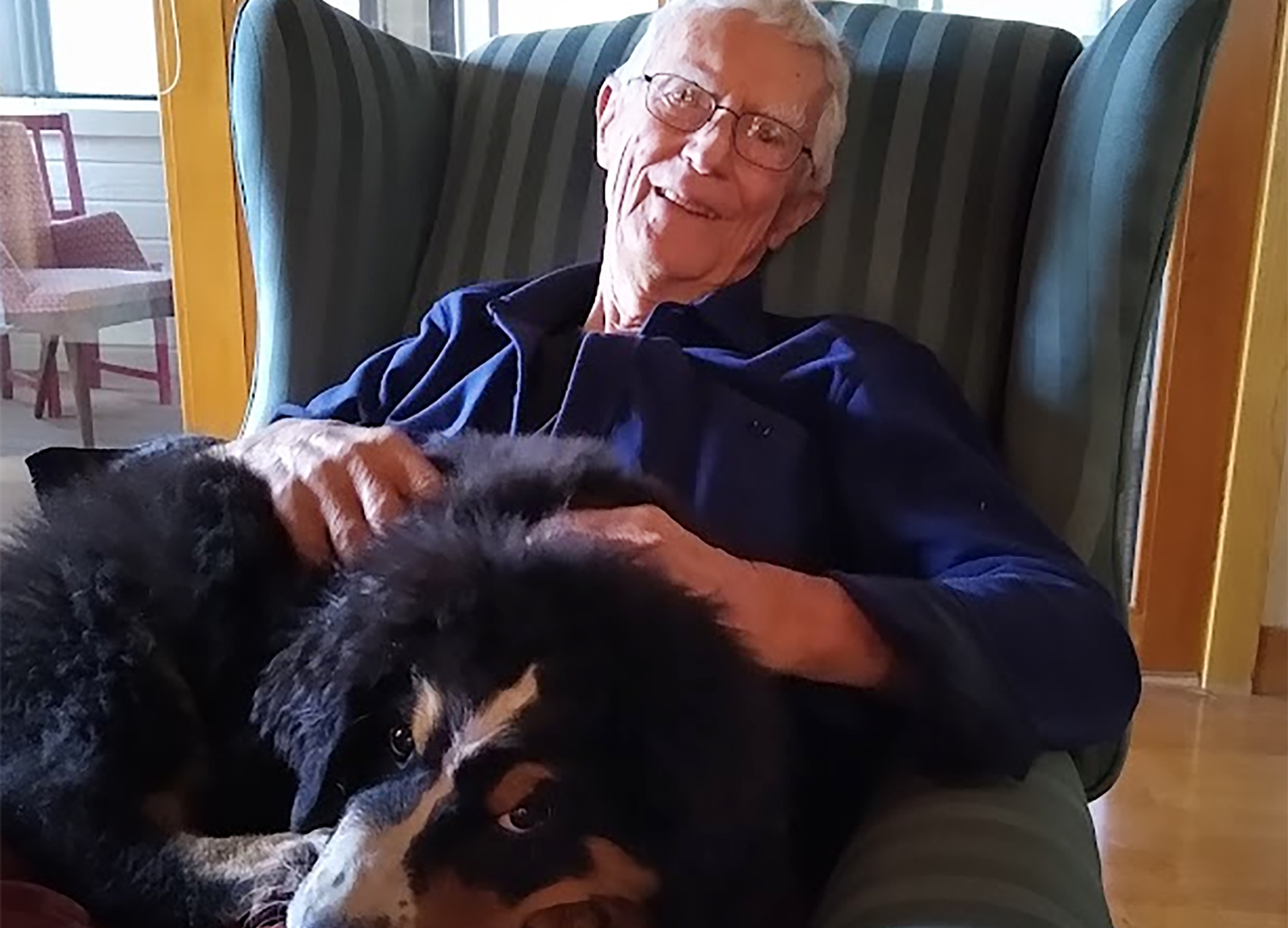
“Opa died!” I heard my wife call from the hallway outside my office.
She had texted him as usual that morning, but received no reply across the 1,494 miles between us and the front door of her father. The last message my wife had received the previous day was a short video of the wind chimes on his front porch making breeze-induced music, sending soft notes into the towering pines of his yard. He’d made no accompanying comment. Presumably because the moment—in its beauty and simplicity—spoke volumes for itself.
A call from the local police had informed her that her father, Bob, was now gone, discovered by a kind neighbor who has been checking in on him each morning for years. They say that a person’s life flashes before their eyes when they die, a phenomenon that is not reserved for the one departing I realized, as images of my experiences with him flooded into my mind.
I’d locked arms with Bob to help him steady while walking up the side of a spring-flowered mountain, stayed up talking with him until the wee hours of the morning on his wind-chimed porch, argued through misunderstandings to get back to the respect and love we shared, became his body and hands following his direction to install smoke alarms after his sense of balance became precarious, and looked him in the eye early in my marriage to assure him that I would care for his daughter when he’d ask with concern about my work life and finances.
Learning of the death of someone you’ve often embraced is like witnessing a close up magic trick. What was tangible and real right in front of your eyes is suddenly gone, and your brain struggles to process the sudden disappearance.
He turned 90 in November and lived with an aortic aneurysm that was discovered several years ago, but which he declined to fiddle with. Not because he felt that life wasn’t worth living, but precisely because it was. He chose quality of life over an intervention that would require ongoing monitoring and procedures. He chose the freedom of his time and attention to send as much love as possible into the world with the time he had left. He had notes taped to the side of his espresso machine to remind himself how his friends liked their coffee, helped a more senior neighbor with getting her garbage out each week, and when last year’s election results arrived he walked across the street to congratulate a member of the other party on their win, like he’d just lost a friendly match of pickle-ball.
“Love,” he’d say often to all who knew him, “was the only thing that really mattered.”
The waves of care he sent toward others in his community will be missed. Perhaps even more than his gestures of thoughtfulness, many will miss the questions of genuine curiosity and insight that he often brought to his conversational partners. Questions that would cause you to discover what you truly thought, and once you reached the bottom of your truth, he’d nod slowly and quietly. “Yesss, hmmm . . . that makes good sense,” he’d say, conveying the authority of his elder hood over to the measure of your own confidence.
I’m writing this from the passenger seat of our car near the tail end of a 1,500 mile pilgrimage we decided to make over land to process this transition as a family.
My wife is weaving in and out of Las Vegas traffic like a cabbie, inches from the bumper in front of me. I decided to relax my body and trust her instead of micromanaging her command of the accelerator, because both of her parents are gone, and she’s in charge now. I’m eight years older, but with my parents still alive she’s now graduated ahead of me in class, operating with free-standing authority alongside her brother in the family line.
I realize looking at my wife that our parents do not actually make sudden departures. They linger behind in the way their children hold the wheel, survey a landscape, decide how and when to pass on the straightaway. The tone of our joy, how long dishes are tolerated in the sink, whether the front door remains open to visitors, it’s all passed along, layered beneath the ground of the family hill. I see her sitting tall in the driver’s seat, eyes on the road, her mother’s beauty and dignity in her uprightness, her father’s elven alertness and curiosity twinkling in her eyes.
I start imagining what kind of eulogy might properly honor Bob’s life. A life he had worked to simplify down to the essential components of relationship, care, and getting good with one’s God through the rigor of personal review. His life was a demonstration of active renunciation, a withdrawal of judgment and criticism and micromanagement of the world while remaining full in the chaos. He’d replaced his grievances with restorative grief, and wide appreciation for the vista of his world.
The last twenty-four hours on the road were the eulogy, I realized.
Had we hopped on a plane to speed down to his empty home we would have missed the panorama of his presence. The highway tears we shed while listening to Leonard Cohen sing Hallelujah, the Idaho dust being thrown off the the rusty till of a farmer’s tractor, the sharp glacial light of the Wallowa mountains by our side, the truck-stop coffee, the rhythmically spaced potholes in the pavement that reminded us with each thump and lurch—you are here.
My last conversation with Bob a few weeks ago over the phone turned to the subject of death, a topic I believe he often steered toward as a means of preparing his being for the inevitable sudden trip. He was open and curious about this upcoming adventure, but also not in denial of the co-existing fear.
“I’m counting on dying in my sleep,” he would often say out loud, as though sufficient repetition of his wish might improve his chances of getting it. And as it turned out, that worked.
Watching my wife drive I was reminded of her story about a camping trip in the Rockies when Bob’s attention drifted in wondrous appreciation toward the glorious mountain peaks while a gaping precipice brushed the edges of the tires a few feet to one side. In the end, it seems his wonder and curiosity did more to preserve his own life and the lives of those who knew him than imperil it.
He had rendered himself innocent and sweet enough that just a few weeks ago—without knowing that a recent meal was causing indigestion—he took himself upstairs, wrote down the words, “Goodbye world, I love you,” and deeming this a sufficient expression for his departure laid down in his bed to die. It wasn’t until he woke the next morning he realized the origin of his discomfort was not a rupture of his aneurysm.
Did he know on the day he shared the chime video that it would be the last time he’d crawl into bed and let himself be held in the expansive and mysterious mind of the universe?
I’m not sure, but I’m certain he had his curiosity with him as he drifted off to sleep.
He didn’t leave a note for the world laying down for that last time.
Perhaps because he felt satisfied that his life—in its beauty and simplicity—would speak volumes for itself.
Rick, this is such an extraordinary, loving tribute to a wonderful human being.
Whenever I think of Bob – and I've been thinking about him a lot these past several days – the one word that keeps popping up in my mind is "curious." He's the most curious person I've ever known, even keeping detailed research notes about a variety of subjects, from UAPs to politics topics to philosophy to health issues.
We met in 2019, just two weeks after I'd moved to Prescott, completely alone, in a local Starbucks. He was curious (there's that word again) about a unique laptop holder that I was using while working on a freelance writing gig. We started talking ... and I now realize that most everyone I've met since, including you, was a result of my friendship with Bob ... thanks to his innate curiosity.
I can think of only one other word that supersedes "curious" when it comes to Bob Krieckhaus. And that word is "love." 'Nuff said.
You and yours hang in there, my friend.
This is lovely. Hugs to your family.