What More Could You Want From a King?
The time I forget the power of "yes" and "no"

I walked into the performance hall which was more full than I expected, glad that it conformed to the usual arrangement for a theater show—the stage in full light, the audience anonymous in the shadows.
I saw empty seats in front, but decided instead to squeeze into the back, thinking I might escape before the end of the performance. I turned sideways and tried to scoot across duck-footed without making anyone get up, but looped the strap of an octogenarian’s handbag while trying to reach the open seat. This was not going to be an easy spot to slip away from.
Sandwiched between a man wearing too much cologne and a kid eating cheese cubes next to his mom, the show was just getting started. I took off my hat so I wouldn’t block the view of those behind me and settled in, relieved I wasn’t in the cast, though I’d been offered a part.
“Thanks, but I’m really too busy with the kids and all.”
That’s the reason I gave for turning down the request to participate in this community theater show, staged by a group of friends. But the real reason I said no had two parts. One, I was afraid I wasn’t up to portraying the character of a Roman ruler in this dramatic period musical. Two, I was afraid the production was going to be amateurish and I didn’t want to be seen in it given my professional theater background.
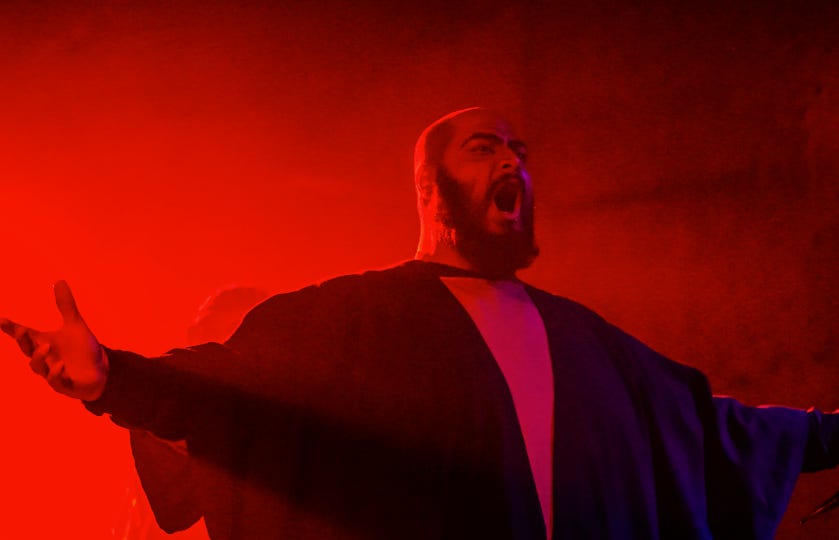
So there I sat—in the back, in the dark—with a combination of relief and smugness watching the production get underway. But my feelings took a 180-degree turn just minutes later when the person who had accepted the role I’d declined appeared on stage.
It was another friend of mine.
The moment I saw him I felt embarrassed and ashamed.
When I turned down the role no one tried to change my mind. They just accepted my reason and moved on. I’d come to the performance as a show of support, but I was in a prison of pride, safety, and cowardice that I didn’t fully register until my friend walked onstage.
Yes, I was busy. I had two kids and commitments to travel and my own performances. But my friend had four kids. Not only that, I knew that he was working two or three jobs to make ends meet, had health issues, financial challenges, and no reasonable guarantee he’d be able to successfully handle this role having had no theater training whatsoever.
Yet there he was. Onstage. Fully committed to the part.
It felt as though the entire lighting plot in the hall reversed. The brightness of the stage receded and I felt the hot spotlight of self-awareness beaming down, suddenly fully visible to myself.
There was never a moment that anyone doubted my excuse, pointed out that my friend was much busier and under more duress than me, or looked at me askance when I showed up as a spectator.
They just put on their show.
The beauty of theater is how the proximity of real people acting out human dilemmas can trigger reflections of our own experiences, struggles, and dreams. I didn’t expect to walk into such an uncomfortable and sobering mirror of my character, but I walked out with the most impactful perspective I’ve ever been offered from a theater show. A clear and decidedly unflattering view of my actual state.
What my friend had demonstrated was the free-standing power that is possessed by the words “yes” and “no”.
He had lots of reasons to say no—way more than me—but he made a decision to say yes. When yes is freed from reason it becomes an agent of commitment, of boldness, of possibility. When no is backed by excuses, it masks the truth of our limitations, and ensures that those chains continue to bind us.
I’m certainly not free of the ugliness of pride, the fear of looking bad, and the self-doubt of stepping up to something new. But, since then, I’m sure that I’ve said yes in moments when I might have used the shield of reasons and excuses to play life safe.
It wasn’t how I expected my friend to successfully portray a leading historical figure, but his real story behind the scenes set an example that I’ve felt inspired to follow ever since.
What more could you want from a king?
The Purpose of Personal Stories
Clearly, I don’t tell stories to paint a flattering picture of myself.
I believe that the honest sharing of our life experiences lifts all boats and brings us together as humans.
Stories are both a way to study the enemy of unconsciousness within, and celebrate the value of the human spirit that is always available to us, even when we’re temporarily living in our own shadow.
Personal storytelling is a safe place to own one’s strengths rather than dismissing them, and to face one’s weaknesses instead of avoiding them.
That makes articulating our stories a practice of leadership. It’s the critical step that comes before attempting to lead others, the groundwork that provides a clear view of our starting point and the truth of the character we’re asking others to follow.
If you find these stories valuable, please consider becoming a paid subscriber to keep me going. The cost is less than you’d spend on a single trip to the coffee shop each month.
If you’d like to learn how to tell your own stories—and benefit from the self awareness and human connection it promotes—you can sign up here for my new Substack publication that will teach you how to recall your most notable life experiences and share them with skill and confidence.


Super helpful reminder:
When yes is freed from reason it becomes an agent of commitment, of boldness, of possibility. When no is backed by excuses, it masks the truth of our limitations, and ensures that those chains continue to bind us.
Thank you for your honesty, your self awareness, and your profound vulnerability.