

Just Be Glad I Showed Up With My Pants On
The greatest challenges of your life sit right alongside your highest contribution to others

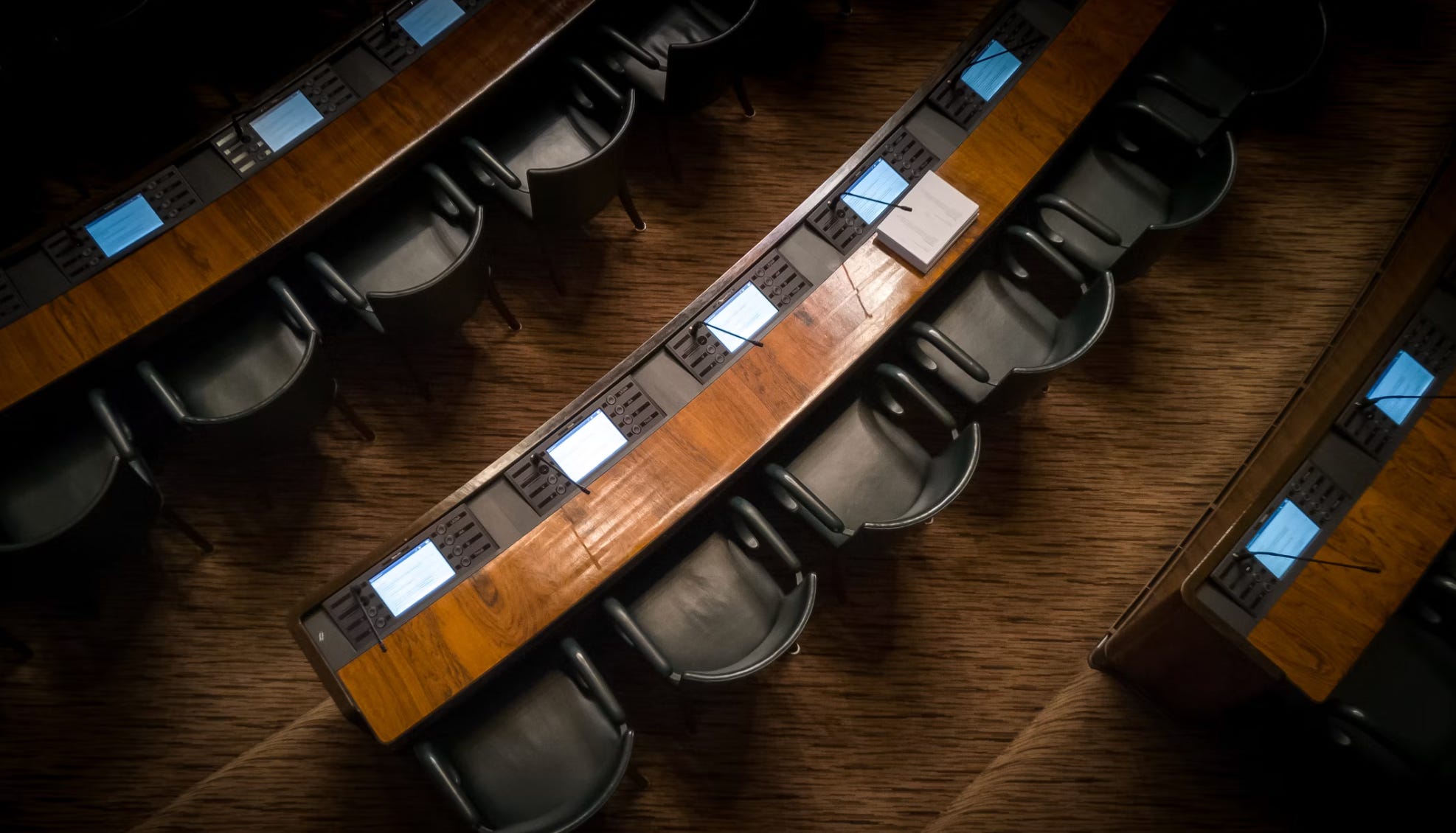
I immediately began to regret that I had decided to sit and listen to the next speaker at the conference. I almost yawned in advance as some executive muckety-muck walked on to the stage. I had seen his type so many times before. The suit, the fancy title, and likely a photo of his trophy wife and Gucci-clad kids on his desk. You could practically smell his vacation homes sitting empty for most of the year. Now we’d all be enduring an equally empty speech.
Minutes ago I had been on that stage myself concluding a presentation about growth and professional development. My ideas were applauded by this audience of one hundred top business leaders in real estate and mortgage banking. I left the podium and took a seat near the front, giving myself a respectable 9.2 mark for a solid showing, humbly acknowledging there was always room for improvement. All I had to do now, I thought, was to sit through the yammering of this in-house division leader before I could collect my check and retire to my hotel room.
He walked onstage with his perfect hair and no doubt a seamlessly prepared and yet mind-numbing Powerpoint. I watched the audience shift in their seats, searching for an inconspicuous position from which they could catch up on some needed sleep.
Soon, however, things stopped going smoothly for our next presenter.
He seemed to be having some difficulty with his equipment. As he fumbled with cords, the microphone and his computer, the attendees realized this could take a while. A handful of people got up for a bathroom break or to check their messages.
After several long minutes of bungling the presenter straightened up, stared out at the crowd, and froze—a proverbial deer caught in the headlights of an expectant audience. By all appearances, this wasn’t going to go well. I’d had nightmares just like this as a performer—suddenly facing a crowd without knowing how I got there, or what I was supposed to say. A sympathetic dread for what was to come crept into my gut.
Now he was standing there looking at us, motionless, apparently drawing a blank as to what to say or do next. My judgment of him had by this time turned to pity, but I had no idea how misguided my assumptions about him would turn out to be. That pity was about to evaporate in a single act of . . . heck, I don’t even know what to call it. Because the person I had reduced to a corporate caricature now had a very human look on his face. A look, dare I say, of vulnerability.
Suddenly there was a real person standing there instead of a corporate title, and he seemed to actually be looking at us—taking us in. And then this person reached down and lifted the cuffs of his dress slacks to reveal beneath his pant legs, two pasty-white bare ankles.
Those who were settling in for their nap looked up. The meeting organizer froze. My whole being was called to attention—the way a lounging platoon of boot camp recruits falls in, ready to salute, when someone with real authority enters the room.
We had all dismissed this executive as a perfectly predictable example of corporate pablum. Now, none of us knew what was going to happen next.
As he introduced himself and began talking, he was breathing heavily as though he’d been running.
“Sorry, I’m still catching my breath. I left my black socks at home,” he explained. “I just figured that out a few minutes ago in my room, so I ran to the front desk to see if they had an extra pair, but then realized I was going to be late and said screw it.”
He paused to catch a few more breaths and then looked at us with an awkward smile.
“Just be glad I showed up with my pants on.”
A light wave of laughter rippled across the room. Now he had our complete attention as he started his story.
“A year ago, a policeman found me leaving my house, half-clothed in a manic state.” He explained. “I was addicted to painkillers.”
A prescription for pain medication following a knee surgery had snowballed over time into opioid substance abuse. Without the finances to sustain the habit, a downward spiral of criminal activity—lying, sneaking, stealing, and fabricated business trips to cover episodes of overdosing in hotel rooms—drove his marriage, bank account, physical health, and mental stability to the brink of collapse. He told us about waking up in gutters, tricking pharmacists into hoarding extra pills, getting mugged by other fentanyl dealers, and how close he’d come to losing his life.
“Not long ago,” he said, “I was inside a motel room that was being guarded by friends, begging at the top of my lungs for drugs.” He spent eight days white-knuckling the symptoms of agonizing withdrawal in that room while friends guarded the door so he couldn’t leave to replenish his supply.
I couldn’t tell you how long he was speaking. It could have been two hours or ten minutes that I’d spent on the edge of my seat. In fact, if someone had pulled the fire alarm in the lobby of the conference center I don’t think any of us would have noticed. We were riveted to this man’s story.
He had single-handedly restored the possibility of authentic conversation in a crowd that ordinarily focused on timeshare investments, upcoming European vacations, and new home renovations. He had broken the rule of facades and appearances. He was now speaking to the human in all of us. To the parts of us that had a stack of unpaid parking tickets in the glove box, challenges with our teenagers, early onset arthritis, bad knees, couches with stale food between the cushions, and secret dreams to quit our jobs and write a novel. His vulnerability gave permission for our collective humanity to be acknowledged.
He went on to describe his absolute, unwavering commitment to physical, mental, and ethical guidelines that were now the foundation of his world. In other words, the importance of vision-based habits.
He began to share the principles that sustained his second chance at life on Earth.
Speak the truth.
Be kind.
Tell your family you love them.
There were ten principles in all, and not a single one came out as being trite, cliche, or Hallmark.
He had veered near enough to the abyss of what he referred to as “the hell of entitlement”, and saw that a life of service to others was his only refuge. And that meant being adamantly dedicated to his wellbeing, and intentional about the thoughts he allowed to dwell in his mind.
To his surprise, the principles he’d adopted to ensure against any possibility of a relapse also inspired others. Sharing them led to empathy, compassion, and caring, and resulted in authentic connections with human beings that led to success in his business.
When he left the stage that day I realized that my own presentation was closer to a 2.9 than it was to a 9.2 in the scheme of what’s possible as a speaker. The applause I had received was merely a polite gesture in comparison to the standing ovation he received after sending a shockwave of honesty through the room.
You don’t have to be a recovering drug addict to get the attention of a human audience. The willingness to simply speak from your most vulnerable experience is a profound gift to others. But by default, we seem to be wired for the opposite.
Since I’ve been coaching speakers and writers in storytelling, I’ve seen again and again how quick we all are to sidestep the most fascinating and useful things we have to share.
I’ve coached people who’ve been in active war zones, life threatening surgeries, bankruptcies, someone who was the daughter of a CIA spy, immigrants who came to America and thrived against impossible challenges and professionals who’ve faced debilitating fears about leadership—all of whom have downplayed or ignored the value of sharing their experiences.
Most of us focus our efforts on using our greatest strengths and talents to obtain love and praise. But the speaker I saw that day demonstrated a much more potent truth.
The moment you share your real story, especially the biggest challenges you’ve faced, is the moment you become most relatable, credible, connected and able to help others.
In addition, the clarity he gained through his self-honest sharing became the best way he could help himself.
What if a memoir isn’t something you write at the end of your life; it’s what you write to get it started.
I wrote 7 Rules You Were Born to Break 15 years ago our of a sincere wish to share what I had learned from my life as a street performer and comedian. It launched a more lucrative speaking career than I could have imagined. Since then, I’ve discovered that everyone has a remarkable life in some way and that fully owning it is the key to authoring your future.
The Memoir Project is my current focus as plan to spend less time on the road as a professional speaker and more time supporting others to telling their own story. In the words of a current participant . . .
This memory reclamation project is only possible because you are here with me. Some old patterns which were so unconscious I couldn’t even describe them, are shifting and crumbling. There is space here inside me for psychic movement. I feel different in my skin and in my relationship to the rest of the world ever since last Tuesday. I feel more hopeful, more grounded. I am not just writing a book (and indeed I really and truly am writing a book!) I am reclaiming my right to be visible and to be heard without shame or self deprecation. My gratitude to everyone here is boundless. — Kate Thomson
If you’re in a professional life transition, a writer who wonders which stories from your life you should tell, or someone with friends who keep saying you should write a memoir and you don’t know where to start—I’m hosting a few free Q & A sessions about a new kind of memoir writing that feels thrilling and approachable instead of daunting and overwhelming.
If you’d like to join us for one of the memoir Q & A sessions, you can sign up here.
And yes, you can come without your socks on.
Many thanks to the members of my Write Hearted community who provided excellent feedback on this draft. Larry Urish Neha Patel Stacey Steinmiller
Another excellent piece Mr Lewis. I love the term - memory reclamation project. Being in the proximity of other storytellers as they remember and share, inspires and reminds us of our own stories. Love our Write Hearted group!
Captivating story! Loved it.