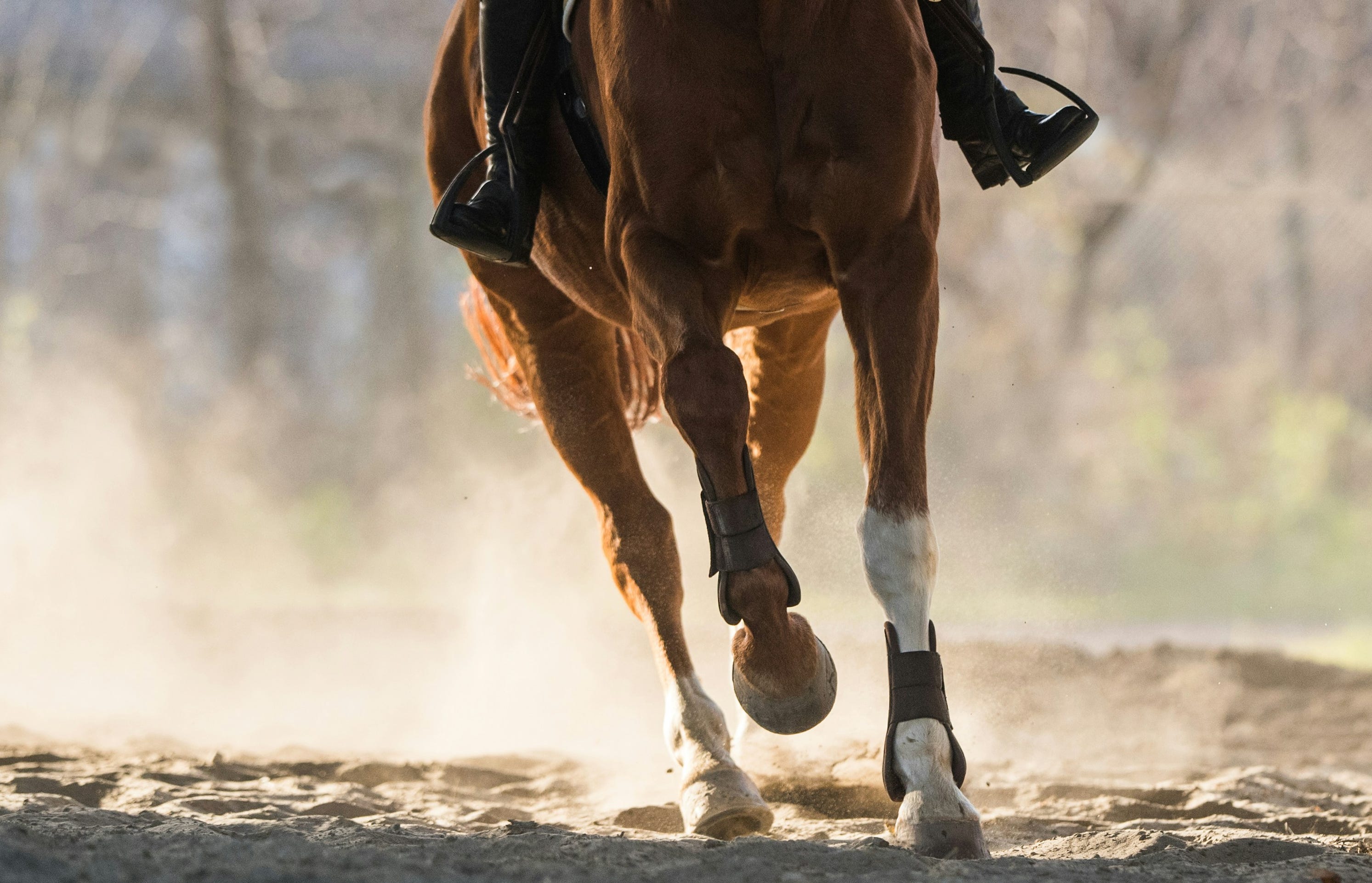
Saved by Horses at 30,000 Feet
How to cheat the leading cause of death with storytelling
The passenger to my right was really getting under my nerves.
It was bad enough that I’d barely slept before the four-hour flight across the country to deliver a speech I hadn’t finalized yet. But the focused flying time I’d been counting on was punctuated by heavy sighs, frequent coughing, and the near constant movement of the gentleman sitting next to me in the window seat.
Ordinarily I prepare for speaking presentations well before setting foot on a plane, but some unexpected family issues caught me off-guard in the days leading up to my departure and now I was attempting to prepare in transit.
Not ideal.
So there I was with a half-functioning brain, the need to focus, and barely enough elbow or leg room to get to work in the middle seat of aisle nine on a Boeing 737 at 30,000 feet.
But the man an armrest away seemed to be having an even harder time than me and it was seriously messing with my own equilibrium. He was tapping his foot, incessantly smoothing his pant legs, listening to music, briefly attempting to find a position for rest, channel surfing the onboard entertainment, adjusting, shifting, and encroaching on my own limited space in the process.
I found myself judging his behavior, but only because it was a mirror of my own dysregulated state. I watched my mind search for some means of escape, but the chances of gaining any distance from his fidgeting in the next three hours was zero.
Looking back at my computer I attempted once again to focus on the subject of my presentation.
I’d be talking to 350 attendees who were all Wichita Falls community members in the state of Texas. The meeting would also include staff members of the United Regional Cardiac Institute that was sponsoring the conference. The annual event was designed to raise awareness of the hospital’s work and promote cardiac health. The CEO of the hospital and a cardiac surgeon were scheduled to speak—followed by me.
In my initial interview as a speaking candidate I proposed that I might talk about the value of connection in reducing stress, assuming I could find some research linking kindness, generosity and compassion to a lowered risk of heart disease, the number one cause of death in the US. The bad waiter routine I enact at the beginning of every keynote is always a good foil for highlighting the importance of human relationships.
A quick internet search brought up what I was looking for in spades. A query for studies showing connections between human relationship and heart health produced immediate research on the reduced risk of heart disease.
Then it occurred to me that I could go a step further to see if there was a link between storytelling, an effective tool for human connection, and heart health. That search showed a positive association between storytelling and increased neural coupling and brain synchronization, increased levels of oxytocin and empathy, a reduction in psychological stress, an increase in evolutionary cooperation and emotional closeness, and lower levels of blood pressure and cortisol production. A compelling set of correlations to pursue for my talk.
Just as I was getting my head in the game my seat mate started fidgeting again. With his left leg touching mine he was now impossible to ignore, because that same leg was bouncing nervously.
I noticed his fingers as he stabbed at the small screen of his phone, flitting between brief starts of movies, then music, back to a movie without settling on anything. His nails were torn to expose roughly half of each nail bed, the sight of them chewed down that far wasn’t surprising given the level of anxiety he seemed to be living with.
How in the world was I going to cope with this for the rest of the flight?
I needed another solution other than getting distance from it, which wasn’t going to happen.
That’s when it dawned on me.
I’d just been reading about the amazing benefits of human connection while silently judging the person next to me and keeping to myself. I’d been harboring the fear that getting any closer to this man would put me over the edge.
But what if the opposite was true?
Perhaps moving toward the distress could provide some relief from each of our states.
The protective, reactive part of me didn’t want to reach out, but I forced myself to close my laptop, make it look like I was taking a break to glance out the window, and considered how I might try to engage the man in conversation.
He had his ear buds in, so I’d need to speak up.
“Are you headed home or away from home?” I asked.
The gentleman glanced over at me and realized I was addressing him. Looking surprised, he removed his headphones.
“What’s that?” he said.
“I was just wondering if you’re heading home, or away from home,” I repeated.
“Oh, I’m heading to see my folks in San Antonio,” he said. “Away from home.”
It was the kind of introductory test exchange on a plane that can end right there or become an opening to a larger conversation. He put his ear buds back in and I was tempted to take it as a signal to back off and mind my own business. But at this point, the business of our inner state was shared. I decided instead to ask one more question.
“When’s the last time you saw your parents?” I asked.
He pulled the ear pieces out again.
“I make this trip once a month,” he said. “The veterinary company I work for makes all their supply purchases on the company credit card, so they have more frequent flyer miles than any of us could ever use, so I travel for free. My dad is 78 and he needs lots of help on the ranch. They’ve owned it for forty years.”
That was the moment that my strategic effort to shift the dynamics between us in our small space in mid-air transformed from a burdensome challenge into genuine curiosity and a grounded connection. Now I was truly interested in his story.
“Oh, so did you grow up there?” I asked.
“Yeah. I’ve been riding horses since the day I could walk,” he said, smiling broadly. “I guess you could say horses are my life.”
“So you’re telling me I’m sitting next to a horse doctor,” I said.
For the next hour I learned about the surprising number of horse owners in our shared hometown of Vancouver, all the issues that a vet can be called for in the middle of the night, the diagnoses he was routinely making from the dozens of photos of horse hooves he was being sent, even then and there on the plane, and why vets need to be calm, confident, effective handlers of horses in distress.
That’s when I noticed that the fidgeting, shifty, anxious activity of the man I was speaking with had stopped while he talked about what he most loved. Who knows why he was so nervous on the plane, perhaps he was just afraid of flying. I didn’t ask. But there was a whole other side to the man who I presumed was a constant nervous wreck, and giving him a chance to share his story about that part of his life invoked that other side of him there on the plane.
When our conversation naturally came to a close, I still had a full hour left to work on my presentation. It was an hour of calm and focused productivity.
Not only did the decision to set my work aside pay off humanly, but in the process of connecting I saw direct evidence of the research that I needed to back up the premise of my presentation. I also realized that I’d just been given this week’s story to share for my newsletter, also a pending stress, now resolved.
“Good luck with your presentation,” the vet said brightly as we stepped onto the gate ramp after reaching the Dallas airport.
“Thank you,” I said. “Enjoy your dad and the ranch.”
We went our separate ways at that point, but we took a lingering sense of connection and friendliness with us.
I laughed, realizing that I had just tamed a horse whisperer, lowered my own blood pressure, and saved my heart the stress of disconnection and judgment—all at the same time just by asking to hear somebody’s story.
The keynote presentation went great by the way.
My bad waiter routine inspired the hospital team to get a picture of all of us together with overfull water glasses in hand.
A reminder that when life feels like too much to handle, connection with other humans can make a full plate or glass entirely manageable.
I’ve also started a new publication to support anyone who wants to use storytelling as tool for human connection.
If you want to be able to tell better stories yourself, or learn to invite others to share their own stories, you can subscribe below.


It’s not easy to break down and break the seal, but I try to remember the quote attributed to Lincoln: “I don't like that man. I must get to know him better.”
Rick, this story is so very helpful from a variety of angles. At the very least, if I'm ever sitting next to an annoying 737 passenger, it can pay to "lean in" and find out more about him or her. And you used the power of human connection and storytelling, which (1) furnished you with firsthand evidence of what you could use in your presentation, and (2) you leveraged into this wonderful essay. I guess that's "walking the walk" on the fly ... literally. Well done.